
Last Updated: November 24, 2026
Quick Summary
To cleanse new crystals, first wipe away dust and packing residue with a soft, dry cloth. Then choose one spiritual method that suits the stone, such as smoke, sound or moonlight, and set an intention before you store it. Check the stone's sensitivity first, since some crystals dissolve, crack or fade when wet.
- Physical cleaning removes dust, oil, fingerprints and packing residue from the surface.
- Smoke or sound are the safest default methods for most stones.
- Selenite should never be soaked in water because it can be damaged.
- Avoid stacking water, salt and sunlight on one stone in a single session.
- Use only dry methods for fragile, porous, dyed or light-sensitive pieces.
Table of Contents
- Physical Cleaning Versus Spiritual Cleansing: What Each Does
- How to Cleanse Crystals at Home: Choosing Your Method
- How to Cleanse Crystals with Water: Safe Stones and Steps
- How to Cleanse Crystals with Salt and Other Gentle Methods
- How to Charge Crystals at Home After Cleansing
- Stone-by-Stone Safety Guide for Fragile and Light-Sensitive Crystals
- Booking Your First Cleansing Routine with Spiritually Rooted
- Frequently Asked Questions
Many people who work with stones suggest cleansing a new crystal before its first use. Learning how to cleanse new crystals gives you a clean starting point, whatever you believe about their energy.
Cleansing a crystal is a simple ritual that resets the stone before you work with it. Many practitioners see it as clearing away the energy a stone picked up during handling. Others treat it as a mindful habit that marks the start of a relationship with the stone. Both views lead to the same practical steps.
A new crystal has often passed through many hands. Once cleansed, learn which stones should not be combined in the same space. Many people feel better knowing they have reset a stone before adding it to a meditation space or a daily practice.
Why cleanse new crystals first?
- It gives you a clear starting point for your practice
- It creates a calm, intentional first moment with the stone
- It helps you notice how the stone feels in your hand
- It is a good habit to build before you begin any ritual work
Physical Cleaning Versus Spiritual Cleansing: What Each Does
Physical cleaning removes dust, oil, fingerprints and packing residue from a stone's surface. Spiritual cleansing is a ritual meant to clear energy and set an intention. The two often overlap, so it helps to know which one you are doing.
Many people start with physical cleaning. A soft cloth and a little water remove most surface dirt. Spiritual cleansing comes next, using a ritual method such as smoke, sound or moonlight.
Watch out: Some stones dissolve, crack or fade when wet, so always check a stone's sensitivity before using water.
How to Cleanse Crystals at Home: Choosing Your Method
Choosing a method is the part most beginners rush. The right choice depends on three things: what the stone is made of, what it is set in, and how much time and setup you want. A method that suits a hard quartz can ruin a soft or water-sensitive stone, so pick the stone first and the ritual second.
A simple first-time routine for a newly purchased crystal looks like this:
- Clean it physically. Wipe the stone with a soft, dry cloth to remove dust, packing residue and fingerprints. If the stone is water-safe, a barely damp cloth is fine; dry it right away.
- Check what it can take. Confirm whether the stone is water-safe, salt-safe and light-safe before any spiritual method. The stone-by-stone guide below covers the common cases.
- Cleanse spiritually with one method. Pick a single method rather than stacking several. Smoke or sound are the safest defaults for most stones.
- Set an intention. Hold the stone for a minute and decide what you want it for, calm, focus, sleep, a specific practice.
- Charge it if you like. Place it in moonlight or on a charging plate, then store it somewhere clean.
That is the whole routine. It takes about ten minutes and works for almost any new stone.
Matching the method to the stone:
- Running water: Best for hard, water-safe stones such as clear quartz and rose quartz. Skip it for soft, porous or water-soluble stones.
- Smoke: Good for most stones, including delicate ones and jewelry. Sage, palo santo and incense all work; a few passes is enough.
- Moonlight: Gentle and safe for nearly every stone, including light-sensitive ones. A night on a windowsill is plenty.
- Sunlight: Effective but risky for stones that fade, such as amethyst and some dyed or light-sensitive pieces. Keep direct sun to short sessions.
- Sound: A bell, singing bowl or tuning fork works for nearly any stone and is the easiest option for jewelry and mixed-material pieces.
- Salt: Useful for hard, durable stones, but avoid it with soft, porous or metal-set pieces.
- Burying in soil: A slow, gentle option for sturdy stones; skip it for porous or coated pieces that soil can stain.
Many beginners find smoke or sound the easiest starting point. Both are safe for most stones, need little setup, and take under a minute. If you are unsure about a stone, start with sound, it is the lowest-risk method on the list.
Watch out: Do not combine water, salt and sunlight on the same stone in one session just to be thorough. Stacking methods increases the chance of damage without adding anything to the ritual.
How to Cleanse Crystals with Water: Safe Stones and Steps
Water is a common cleansing method, but it is not safe for every crystal. Check the stone before you start.
Steps for water cleansing:
- Check that the stone is water-safe and not soft, porous or water-sensitive
- Rinse the stone under cool, running water for about one minute
- Pat the stone dry with a soft cloth
- Hold the stone and set your intention for the cleansing
- Let it air-dry fully before storing it
Watch out: Never soak selenite or other water-sensitive stones, because water can damage them.
How to Cleanse Crystals with Salt and Other Gentle Methods
Salt is another common approach, usually in the form of sea salt, which has a rough texture. Many people place a stone on a bed of dry sea salt and leave it for several hours. Salt is harsh on some stones, so it is best reserved for hard, durable crystals.
Gentle methods such as smoke, sound and moonlight suit delicate stones. Passing a stone through sage or palo santo smoke takes only a few seconds. A singing bowl or bell rung near the stone works well for jewelry and mixed-material pieces too.
How to Charge Crystals at Home After Cleansing
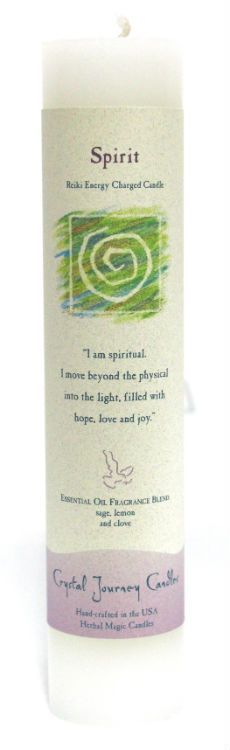
Charging is the step many people take after cleansing. If you prefer a ready-made option, you can view the Cleansing Reiki Charged Pillar. It is a way to set a purpose for the stone. Place the stone in moonlight, in a bowl of dry sea salt, or on a charging plate. You can also hold it and speak your intention aloud.
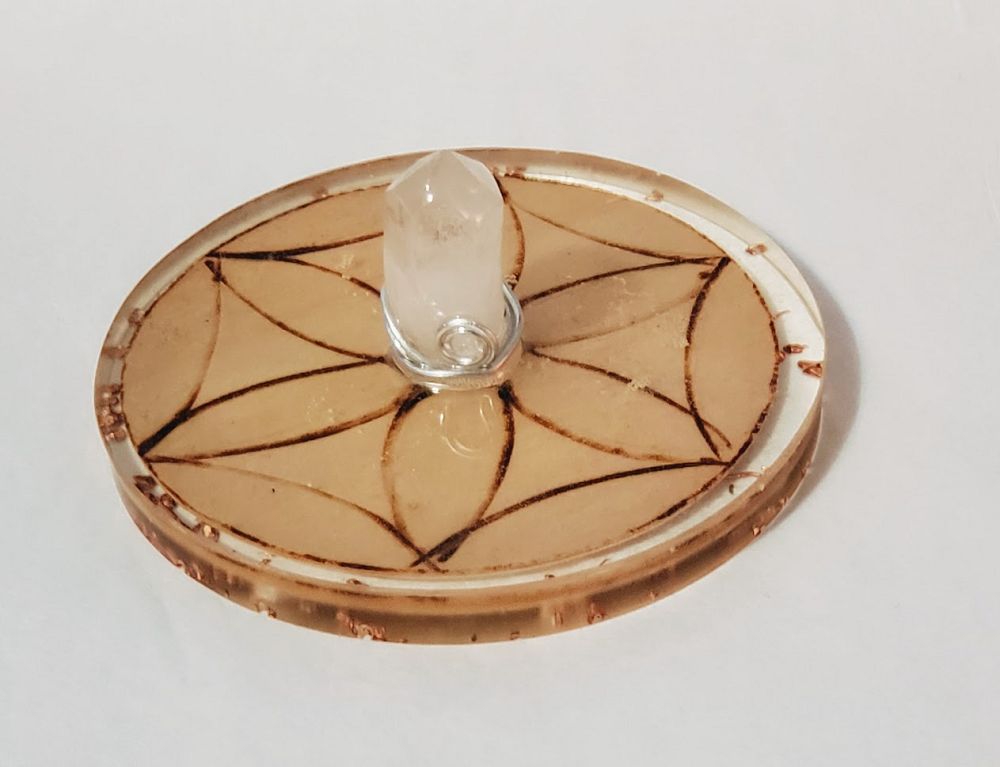
The Sacred Geometry Orgone Grid is a charging plate people use to cleanse and charge items such as jewelry, water and crystals. If you would rather buy a ready-made charged stone, you can view the Spirit Reiki Charged Pillar. Place your stone on the plate and let it rest there while you focus on your intention. You can find it here: Sacred Geometry Orgone Grid.
Stone-by-Stone Safety Guide for Fragile and Light-Sensitive Crystals
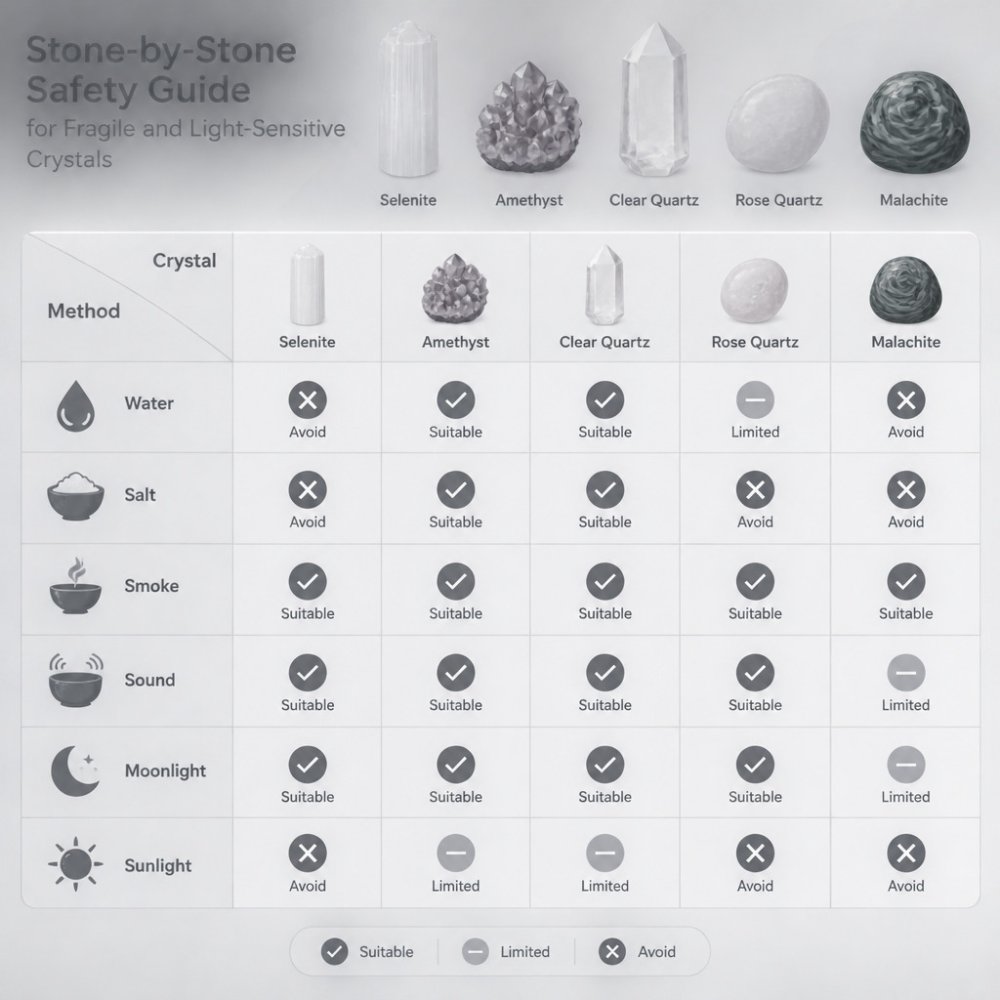
Most cleansing damage comes from a handful of stone types. The table below covers the stones beginners most often bring home, with the methods to use and the ones to skip. Treat it as a starting point, not a guarantee, dyed, coated, fractured or jewelry-set pieces can behave differently from a plain tumbled stone.
| Stone | Water | Salt | Sunlight | Safer alternatives |
|---|---|---|---|---|
| Selenite | Avoid, dissolves and pits | Avoid, scratches and clouds | Fine | Smoke, sound, moonlight |
| Amethyst | Fine | Fine | Limit, color can fade | Moonlight, sound, smoke |
| Clear quartz | Fine | Fine | Fine | Any method |
| Rose quartz | Fine | Fine | Fine | Any method |
| Malachite | Avoid, porous and sensitive | Avoid | Fine | Smoke, sound, dry cloth |
| Pyrite | Avoid, rusts | Avoid | Fine | Dry cloth, sound, smoke |
| Halite (rock salt) | Avoid, dissolves | Avoid | Fine | Sound, smoke, dry storage |
| Hematite | Avoid, rusts | Avoid | Fine | Dry cloth, sound, smoke |
| Turquoise (treated) | Limit, can absorb oils and water | Avoid | Limit, some pieces fade | Dry cloth, sound, smoke |
| Opal (non-precious) | Avoid, can craze or crack | Avoid | Fine | Smoke, sound, moonlight |
| Labradorite | Fine | Fine | Fine | Any method |
| Moonstone | Fine | Limit | Fine | Moonlight, sound, smoke |
Stones that cannot get wet or see light: For fragile, porous, dyed or light-sensitive pieces, use dry methods only, sound, smoke or a dry cloth, and store them away from direct sun. A singing bowl or a few passes through incense smoke cleanses without any moisture or UV exposure.
Crystal jewelry and mixed-material pieces: Pendants and rings often combine stone with metal, adhesive or a plated setting. Water can tarnish or loosen metal, and salt is especially hard on plated finishes. For jewelry, stick to sound, smoke or a dry cloth, and remove the piece before any water-based cleaning of the stone itself.
Physical cleaning versus spiritual cleansing for fragile stones: If the goal is removing dust or fingerprints, a soft dry cloth is almost always the right tool. Save the ritual methods for the spiritual step, and never use an abrasive cloth or cleaner on a soft stone.
Always test a method on a small, hidden part of a stone first if you are unsure. When in doubt, choose sound or smoke, they are the two methods least likely to damage any stone on this list.
Booking Your First Cleansing Routine with Spiritually Rooted
If you would rather have your new crystals cleansed for you, you can explore the services Spiritually Rooted offers. You can book a professional spiritual cleansing with the team. You can find out more here: Spiritually Rooted.
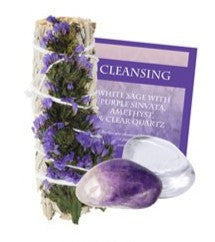
For a simple start at home, the Cleansing - Sage & Gemstone Set is a bundle with white sage, purple sinvata flowers, amethyst and clear quartz, priced at $8.95. You can find it here: Cleansing - Sage & Gemstone Set.
Frequently Asked Questions
How do I cleanse crystals when I first get them?
Start by checking the stone for any dust, packaging residue or handling marks. Choose a method its material can tolerate: water works for hard stones like quartz, while water-sensitive stones such as selenite and some soft minerals should be cleared with smoke, sound or simply by holding them with intention. Cleanse once before the first use, then again if the crystal has been handled by many people. A gentle first routine protects your new stones and gives you a calm start to your practice.
Can I cleanse crystals with water and salt?
Many hard stones tolerate plain running water, but salt water is harsher and can damage porous or soft crystals. Sea salt dissolved in water is best reserved for durable stones, and a dry salt bed is an alternative for stones that cannot get wet. Always rinse salt off afterward and dry the crystal thoroughly. Avoid salt on stones that dissolve, fade or etch, and check the stone's hardness before deciding.
Do I need to charge a crystal after cleansing it?
Cleansing and charging are separate steps. Cleansing removes residue from handling and storage, while charging is a practice many people use to set a clear intention for the stone. You can charge crystals on a Sacred Geometry Orgone Grid Charging Plate, or place them near a Selenite Wand, which is often used to cleanse and charge other stones. Whether you charge is a personal choice and does not change the stone's physical properties.
Is there a simple cleansing method for beginners?
For many beginners, a smoke cleansing with white sage or a bundle such as the Cleansing - Sage & Gemstone Set is a place to start. Hold the crystal in the smoke for a few moments, keeping any flame safe and ventilated. Water-sensitive stones should avoid this method only if heat or ash is a concern, and sound or moonlight methods are gentler alternatives for fragile pieces.


