
Last Updated: November 22, 2026
Quick Summary
To choose a crystal for your zodiac sign, find your sun sign from your birth date and read its traditional stone, such as carnelian for Aries or amethyst for Virgo. Then notice which stone feels right when you hold or see it, and choose the one that fits your budget and style. The traditional match is a starting point, not a rule.
- Find your sun sign from your birth date before choosing a stone.
- Each sign has a traditional stone, plus alternatives if it does not feel right.
- Check whether the stone's intention matches what you want support with now.
- Compare two or three candidates and notice which one you keep returning to.
- Confirm cleaning and care needs, since some stones are soft or fade in sunlight.
Table of Contents
- Understanding Zodiac Sign Crystal Associations
- Zodiac Crystals Chart: Sign-by-Sign Recommendations
- Healing Crystals for Zodiac Signs: Matching Strengths and Balancing Weaknesses
- Going Beyond Your Sun Sign: Rising Sign, Moon Sign and Other Factors
- Crystals to Avoid Based on Zodiac Sign
- Astrology Crystals Meaning: Evidence, Belief and Responsible Claims
- Choosing Your Crystal This Week: Start With a Small Step
- Frequently Asked Questions
Understanding Zodiac Sign Crystal Associations
Choosing a crystal for your zodiac sign is one of the most popular ways people bring astrology into daily life. Many people start with this question because a stone feels like a personal, portable reminder of who they are.
The core idea is simple. Each sun sign is traditionally linked to one or more stones, and those stones are said to support that sign's strengths or ease its challenges. This is a belief-based tradition rather than a scientifically tested system, so it works best as a guide for reflection and intention.
Here is a practical way to start:
- Find your sun sign based on your birth date
- Read the traditional stones linked to that sign
- Notice which stone feels right when you hold or see it
- Choose the one that fits your budget and style
The "right" crystal is often the one you feel drawn to, not only the one on a chart. A useful approach is to read the traditional match first, then trust your own response.
Zodiac Crystals Chart: Sign-by-Sign Recommendations
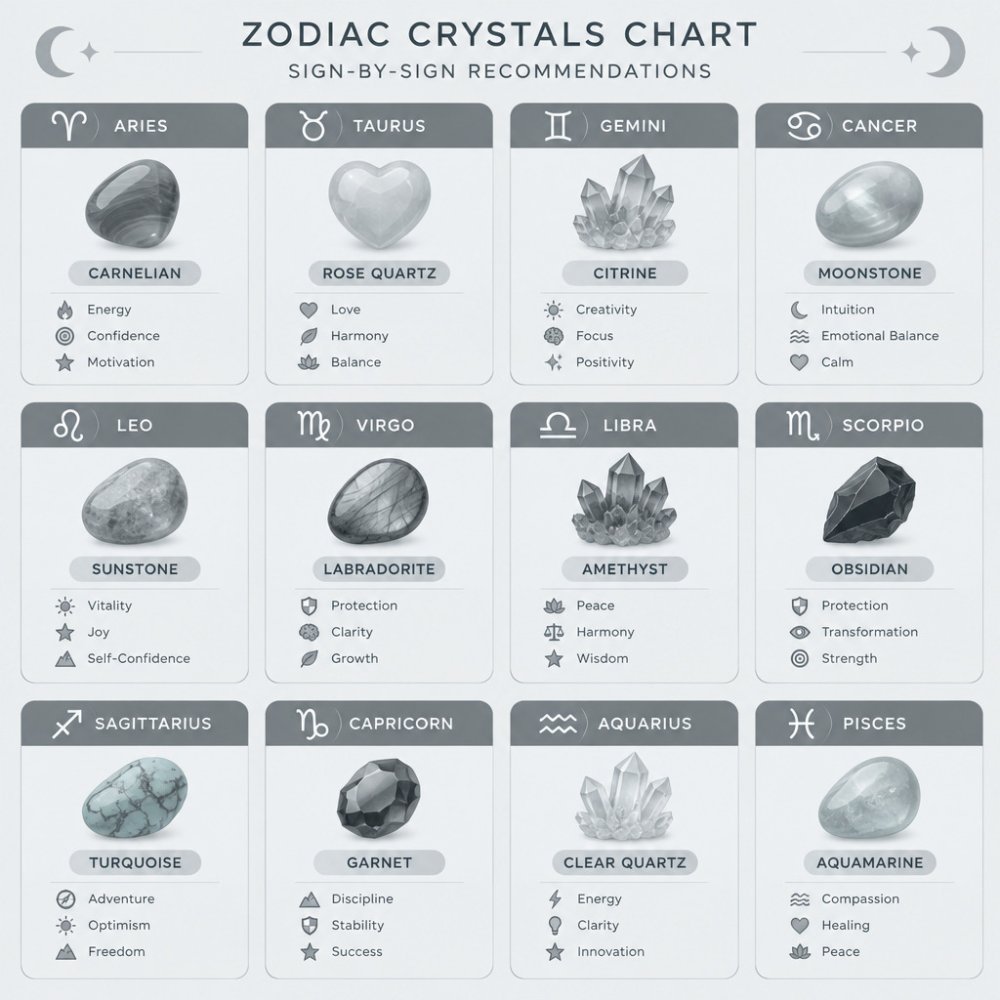
Traditional guides pair each sign with a stone, but the pairing is a starting point, not a verdict. The chart below lists a common traditional match for each sign, the properties that match is usually said to support, the intention people most often choose it for, and one or two alternatives if the primary stone does not feel right to you. Treat the "properties" and "intention" columns as tradition and personal practice, not as established effects.
| Sign | Traditional stone | Properties traditionally associated | Common intention | Alternatives |
|---|---|---|---|---|
| Aries | Carnelian | Warmth, momentum, courage | Starting something new | Red jasper, sunstone |
| Taurus | Rose quartz | Gentleness, comfort, self-worth | Softening rigidity, self-care | Emerald, green aventurine |
| Gemini | Citrine | Brightness, curiosity, sociability | Focus during busy periods | Agate, clear quartz |
| Cancer | Moonstone | Calm, intuition, emotional steadiness | Settling fluctuating moods | Pearl, selenite |
| Leo | Tiger's eye | Confidence, presence, grounded will | Steadying confidence without bravado | Amber, citrine |
| Virgo | Amethyst | Clarity, calm, perspective | Quieting overthinking | Moss agate, amazonite |
| Libra | Rose quartz or blue kyanite | Harmony, balance, honest speech | Decision-making and fair communication | Lapis lazuli, jade |
| Scorpio | Obsidian or malachite | Depth, release, transformation | Letting go of what no longer serves | Smoky quartz, black tourmaline |
| Sagittarius | Turquoise | Openness, travel, optimistic outlook | Broadening perspective | Sodalite, lapis lazuli |
| Capricorn | Garnet | Persistence, discipline, stamina | Sustaining long efforts | Onyx, hematite |
| Aquarius | Amethyst | Independent thought, calm insight | Thinking clearly outside group pressure | Aquamarine, labradorite |
| Pisces | Aquamarine | Calm, flow, gentle boundaries | Grounding during emotionally intense periods | Amethyst, moonstone |
Stones overlap across signs, so a single crystal can suit several people. That is normal, and it is one reason a chart alone cannot make the decision for you.
How to choose when the chart gives you more than one option
A short decision flow keeps the chart useful without turning it into a rule:
- Start with your sun sign's traditional stone and read its intention column.
- Ask whether that intention matches what you actually want support with this month, focus, calm, confidence, boundaries, or something else.
- If it does not match, move to an alternative in the same row before jumping to another sign's stone.
- Hold or view two or three candidates and notice which one you keep returning to.
- Check practical factors: size, weight, whether you want to wear it daily, and how it will be cleaned and stored.
- If nothing resonates, choose by intention rather than by sign, a stone tied to calm is a reasonable pick for a stressed Aries, even though it is not the traditional Aries match.
Watch out: a chart that presents one definitive stone per sign can push you toward a purchase you do not actually want to wear or handle. The chart is a menu, not a prescription.
For a fuller reference, our Crystals Beyond Beginners guide explains each stone's meaning in more depth, and the crystal connections chart lets you compare pairings side by side.
Healing Crystals for Zodiac Signs: Matching Strengths and Balancing Weaknesses
Healing crystals are chosen in two ways: to support a sign's natural strengths, and to ease tendencies people want to balance. The distinction matters because the same stone can be chosen for opposite reasons. A fiery Aries might choose a calming stone to slow down, while a sensitive Pisces might choose a grounding one to feel more anchored. Neither choice is more correct, the intention behind it is what makes the stone useful to you.
Supporting strengths versus balancing tendencies
A common pattern is to pick a stone that amplifies what already works, then add a second stone for the trait you want to soften. Some examples of how practitioners frame the two directions:
- Aries: support momentum with carnelian; balance impatience with amethyst or moonstone.
- Taurus: support steadiness with rose quartz; balance stubbornness with clear quartz or citrine.
- Gemini: support curiosity with citrine; balance scattered attention with hematite or smoky quartz.
- Cancer: support emotional awareness with moonstone; balance mood swings with grounding stones such as black tourmaline.
- Leo: support confidence with tiger's eye; balance pride or need for approval with rose quartz.
- Virgo: support careful analysis with amethyst; balance overthinking with moss agate or amazonite.
- Libra: support harmony with rose quartz; balance indecision with blue kyanite or lapis lazuli.
- Scorpio: support depth with obsidian; balance intensity with smoky quartz or moonstone.
- Sagittarius: support openness with turquoise; balance restlessness with hematite or onyx.
- Capricorn: support discipline with garnet; balance rigidity with green aventurine or rose quartz.
- Aquarius: support independent thought with amethyst; balance detachment with rose quartz or jade.
- Pisces: support intuition with aquamarine; balance overwhelm with black tourmaline or hematite.
These pairings come from long-standing tradition and personal practice. They are not a substitute for medical or mental health care, and no stone should be expected to change your personality or fortune.
Making the match practical: wear, carry, or place
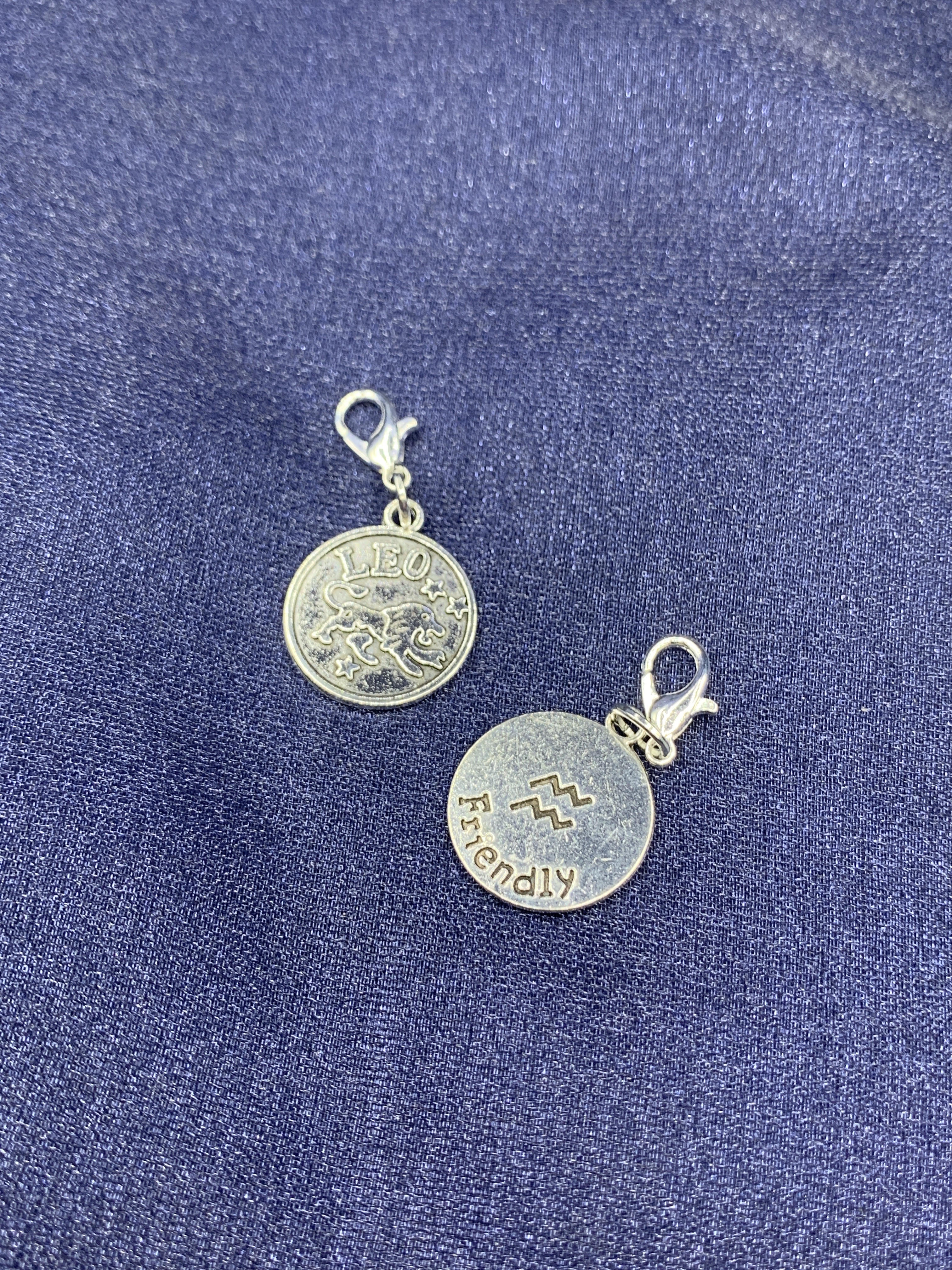
Many people wear their stone. A zodiac necklace or a charm made for your sign lets you keep the crystal close through the day. A zodiac gemstone bracelet is another option if you prefer something you can wear daily. Others keep a stone in a pocket, on a desk, or beside the bed, which is often easier if the stone is large or fragile.
Watch out: some stones are softer or more porous than they look. Malachite, for example, is commonly sold polished and should not be soaked in water or exposed to harsh cleaners, and many dyed or heat-treated stones can fade in direct sunlight. Ask how a specific piece should be cleaned before you commit to wearing it daily.
Responsible expectations
Keep expectations realistic. Crystals are a personal tool for focus and intention, not a medical treatment. If you are choosing a stone to help with anxiety, sleep, or low mood, treat it as a reminder and a ritual alongside proper care from a qualified professional, not as a replacement for it. Being clear about that boundary is part of choosing well.
Our crystal meanings guide gives traditional associations alongside this caution.
Going Beyond Your Sun Sign: Rising Sign, Moon Sign and Other Factors
Your sun sign is only one part of your chart. Many astrologers also look at the rising sign, which describes how you present to others, and the moon sign, which relates to emotions and inner needs.
If your sun-sign stone feels off, check whether your moon sign points to a different, softer stone. Some people blend two stones, or simply choose the one that matches their current season of life.
Crystals to Avoid Based on Zodiac Sign
No stone is "bad" for any sign, but some shoppers prefer to avoid stones that feel too intense for them. Watch out: a very strong or dark stone, such as obsidian, can feel heavy for someone already under stress. Start with a gentler option and see how you feel.
Also avoid buying a stone only because a chart says it is "lucky." Choose one you like to look at and hold.
Astrology Crystals Meaning: Evidence, Belief and Responsible Claims
Crystals and astrology are belief systems. There is no reliable scientific evidence that a stone changes personality or fortune. The meanings listed here come from long-standing tradition and personal experience.
It helps to be honest about this when you shop. Use crystals as reminders, rituals and conversation starters, and rely on proper medical or professional care for health concerns. Our crystal meanings guide gives traditional associations alongside this caution.
Choosing Your Crystal This Week: Start With a Small Step
Pick one step this week. Look up your sun sign, choose two stones from the traditional list, and visit a store or browse online to see them in person. Hold each one, notice your response, and pick the one that feels right.
Spiritually Rooted offers crystals, jewelry and ritual supplies. Shop the collection to find the stone that fits your path.
Frequently Asked Questions
What crystal is best for each zodiac sign?
There is no single correct stone for any sign. Traditional lists pair each sign with a few stones, such as amethyst for Pisces or citrine for Gemini, and these pairings reflect metaphysical tradition rather than scientific fact. Start with the sign's listed traits, then pick one stone whose color or meaning appeals to you. Many people also choose a stone for the quality they want to develop, such as calm or confidence, regardless of their sign.
Are zodiac crystals based on your sun sign?
Most zodiac crystal charts are built on the sun sign, the position of the sun at your birth date, because it is the easiest to identify. Some practitioners also consider your moon sign or rising sign, which can add nuance to a choice. If you are unsure of your other placements, a birth chart calculator can show them. Using your sun sign as a starting point is a reasonable choice for most beginners.
Can I choose a crystal that is not associated with my zodiac sign?
Yes. Many people choose a crystal based on personal resonance, the stone they feel drawn to or the quality they want to cultivate, such as grounding or communication. A simple method is to hold several stones, note which one you feel most drawn to, then read its meaning to see if it fits your goal. Your chosen stone does not need to match your sign to be meaningful to your practice.
Are there crystals to avoid based on your zodiac sign?
Some traditional astrology sources suggest that certain stones may not suit particular signs, but these recommendations are not consistent across sources and are not supported by scientific evidence. If a stone feels unpleasant to you, that is a valid personal signal to choose something else. Whatever you choose, handle stones safely: keep them out of water if they are water-sensitive, such as selenite, and avoid placing them in direct sun for long periods, since some colors can fade.


